Monday, April 25, 2011

Please Help to Stop the Trophy Hunt


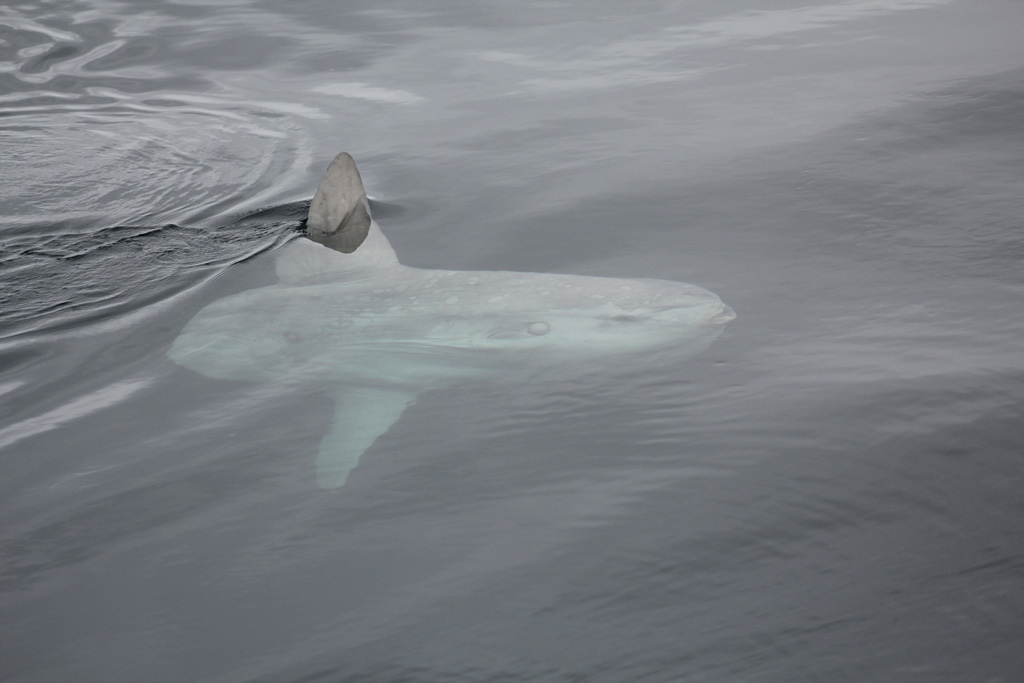
Photo Credit (left): Andy Wright

Each year, hundreds of these animals are killed by Trophy Hunters. Those bears that you saw playing in a stream during your adventure may have already been killed by the time you returned home from your adventure.

In 2007 a record 430 grizzly bears were killed in British Columbia, 363 of them by sport hunters. This alarming statistic raises serious questions about government policy towards these bears. The science used to estimate grizzly populations, and therefore set harvest quotas, is weak.

Government grossly undervalues grizzly bear viewing as an economic generator while overestimating the importance of trophy hunting, revealing its bias toward the hunting sector. In addition, given the grizzly’s vast habitat requirements, the health of this species will be a measure of our ability to make sound landscape-based decisions around forestry, mining and other extractive industries.

The Raincoast Conservation Foundation latest campaign to stop the trophy hunt on coastal BC is aiming to raise the funds required to buy out commercial hunting territories.

To date, Raincoast has raised approximately $200,000. The deadline is fast approaching. Please help to reach their goal of $370,000 by May 31, 2011. Learn more on how you can help here.

Wednesday, December 8, 2010

Good News for the Holidays!


In the past 24 hours there have been two victories for British Columbia's coastal waters!
1) MP's in the House of Commons voted in favour of a motion to ban oil tankers on BC's north coast.

This ban would prevent bulk oil tanker traffic in the Dixon Entrance, Hecate Strait and Queen Charlotte Sound. It's just the beginning - continual support is needed as this motion now moves to become legislation - but it's a hopeful start. It means that Parliament is listening to British Columbians, whose majority do not want oil tanker traffic on their coast.


As a company that has sailed in these areas for over 35 years, Bluewater knows how important this motion is. Oil tanker traffic in these ecologically sensitive waters - waters that are also some of the most volatile in BC - just doesn't make sense. Enbridge claimed in a desperate advertisement yesterday - an ad that mentions (short-term) job creation for First Nation communities, but fails to mention how many of them don't want those jobs - that 1500 tankers have safely travelled in our waters.


We know it only takes one to mess that up.


Read more about the motion to ban oil tankers on our coast here.


2) Yesterday, the Sierra Club of BC and other conservation groups won a landmark federal court decision aimed at protecting endangered orca whales.


In June 2010 Ecojustice, representing the Sierra Club of BC and other interested groups, made the argument to federal courts that by failing to protect important aspects of northern and southern resident orca habitat - such as salmon prey availability and unpolluted water - the Department of Fisheries and Oceans (DFO) was failing to protect these species at risk.


This court case win means that "the government must now take immediate action to ensure that DFO obeys the law" (Susan Howatt, Sierra Club BC campaign director) and makes steps toward protecting not only the orca, but also their habitat.


Bluewater guests often have the opportunity to view the southern and northern resident orca on many of our trips, especially around Northern Vancouver Island. We know how important a healthy habitat is and we are thrilled with this victory.


That being said, this victory is not just a victory for orca - it is a triumph for other species that've also been listed as At-Risk, many of who we see on Bluewater trips, such as sea otters, fin whales, humpback whales, grizzly bears, ancient murrelets and great blue heron.


Read more about the courts decision here.

Tuesday, October 26, 2010

Salmon are Sacred...


One of the hot topics in BC this past week has been pacific salmon, specifically Fraser River sockeye salmon.

With the Fraser River run being so large this year - estimates range between 34 and 36 million sockeye salmon returned to their home rivers - it's easy to forget that the 2009 run was one of the worst Fraser River sockeye returns remembered; only 1.5 million salmon returned, versus the 11 million expected.
Lucky for us who worry about the future of our Pacific Salmon, Alexandra Morten will not forget.

This past Sunday, October 24 2010, Alexandra and a group of paddlers and rafters paddled from Musqeum to Vanier Park, the final leg of a long journey down the Fraser River from Hell's Gate. The Island Odyssey was there to support this final leg, even bringing some of the younger paddlers aboard during a particular tough section.

The journey represented a portion of the long journey our sockeye salmon make every year and was timed with the start of the Cohen Commision. On Monday the group marched into town and presented a Salmon Are Sacred scroll to Justice Cohen to show support for his inquiry into the collapse of the 2009 sockeye return.
Yes, it will be hard to ignore the large numbers of salmon that we had this year but some scientists are wondering if there is another explanation for the 2010 anomaly... an Alaskan volcano. Its eruption in 2008 lead to huge blooms of plankton, which in turn would have increased the food resources for Pacific Salmon.

We won't know if the 2011 Fraser River sockeye run will also benefit from this algal bloom or if there will be another collapse. Our hope is that the Cohen Commission will shed light on the reason for the low salmon return numbers in 2009, including the effects of sea lice and disease, thought to originate from open pen salmon farms that litter our coastline.

In the end we can't afford to forget the run of 2009, nor the previous 3 years that also had lower than expected return numbers.

We must be cautious when it comes to managing our pacific salmon, the link to our animals - marine and terrestrial - our forests, and our people.

Our salmon are sacred...period.

Thursday, September 2, 2010

Boatloads of Education


One of the things that we pride ourselves on at Bluewater Adventures is that we are actively involved with the education of future generations. Each spring and fall we host secondary students for 4-5 day educational trips in the Canadian Gulf Islands - last spring we hosted over 250 students!


The focus on these trips is to give students an opportunity to explore the incredible biodiversity found in the Canadian Gulf Islands. Another educational component is student participation in the operation of the boat, including environmental stewardship, navigation, sailing, meal preparation and everyday chores. These trips are both a fun adventure for students and a rewarding experience for crew and teachers.

Several of our crew extend this passion - for sharing the BC coastline with youth - into impressive careers in environmental education. Take for example Rod MacVicar, a former Bluewater skipper, who has been educating youth for 40 years. Some of Rod’s most notable achievements are the founding of the Mossom Creek Hatchery in Port Moody and the Reed Point Marine Education Centre. Most recently he was also awarded the 2010 Blanch Hornbeck Award for Excellence in Nature Education by the Roger Tory Peterson Institute of Natural History.

Congratulations Rod! We’ve been fortunate to have your involvement in Bluewater – you’ve been an inspiration to both students and crew.

Read more about Rod’s achievement here.

To learn more about Bluewater school trips, visit our website.

Thursday, July 15, 2010

25 year old Moratorium on Whaling Remains!


Our 2010 season has been great for whale sightings – Humpback whales, several species of Porpoises, Orcas and even the 2nd largest animal in the world, the Fin Whale.

It’s hard to imagine but the areas we visit were historically were even greater in numbers, and would be still today, if it were not for the whaling industry which greatly decreased global whale populations, sometimes to critically low numbers.

For example, the global population of Humpback Whales – one of the whales we frequently cross paths with – was reduced to 90% in the 20th century and was put on the endangered species list. In response to these critically low numbers, the International Whaling Commission put a moratorium on hunting them in 1966.
Since then the northern pacific population has risen from 1,400 to almost 20,000 in number!

Another familiar whale to Bluewater is the Fin Whale, an enormous baleen whale, known for its speed relative to its size. This animal was also hunted to near extinction, but hasn’t had the recovery in the same numbers that the humpback has. This may be that despite a moratorium on whaling, a few countries are still hunting fin whales today.

A few weeks ago the International Whaling Commission met in Morocco to revisit the 25 year moratorium on hunting whales. Fortunately there was a huge global outcry and the proposal to lift the moratorium was shut down. Unfortunately, there are still countries that are hunting these whales under the guise of ‘scientific research’ and sometimes regardless of the moratorium.

Luckily for the whales that migrate to – and live around – the waters of coastal BC and SE Alaska, they are safe from the harpoon.
Some researchers even wonder if our waters are becoming the ‘retirement homes’ for whales that no longer need to migrate for breeding purposes.

If location is everything, these whales have chosen a great place to stay, with good food resources and friendly neighbours. We look forward to viewing these whales for years to come – shooting them only with the camera.

To find out how you can join us on a trip to see whales in friendly waters, visit us at our website.

Thursday, June 24, 2010

Federal Support for the Ban on Oil Tanker Traffic in the Great Bear Rainforest!


June 21st marked a big step towards a legislative ban on oil tanker traffic along BC's coast.

On Monday, Micheal Ignatieff and the Liberal Part of Canada announced that they would make a commitment to formalize the oil tanker ban in British Columbia. This ban would prevent crude oil tankers from using BC's Central and North Coast as the 'water highway' for Enbridge's crude oil tankers.
The proposed Northern Gateway Pipeline, ending in Kitimat, would result in an average of 225 oil tankers per year travelling up and down the BC north-central coastline, known to many Bluewater passengers as the Great Bear Rainforest.
That's 225 chances that one of these tankers could leak crude oil into this lush area, home to animals such as Humpback Whales, Orcas, Fin Whales, five Pacific Salmon species, Grizzly Bears and the rare genetic variation of the Black Bear, otherwise know as the Spirit or Kermode Bear.

Being an area that we frequent during our season, Bluewater has long been a supporter of the ban on oil tankers in the Great Bear Rainforest. On March 23 Bluewater was a part of an unprecedented grouping of 150 First Nations groups, businesses, environmental organizations, and prominent Canadians who ran a full-page ad in the Globe and Mail, with the headline "This was Exxon's gift to Alaska. B.C. Can Expect the same from Enbridge".

Over our several decades of travelling in this area we've already seen evidence of increasing pressure on this precious ecosystems -- oil tanker traffic would certainly increase that pressure.
Monday's announcement is a step towards the eventual goal of a legislated ban on oil tankers. We know the animals of the Great Bear Rainforest would approve...

To read more about this exciting development and see the proposed route for these oil tankers at the Living Oceans website.

Want to get involved in this campaign? Why not write a letter to Stephen Harper to tell him what you think of Enbridge's pipeline application.

Tuesday, June 8, 2010

Protection for BC marine waters on World Ocean Day

It's official.

Haida Gwaii will be home to Canada's first park protected marine area.

Yesterday the Gwaii Haanas marine conservation area was established under the Canadian National Marine Conservation Areas Act. The area extends 10 kilometres offshore from the already existing Gwaii Haanas park reserve and will serve to protect the homes of numerous whales, pinnipeds, seabirds, fish, and possibly even coral. Read more about this exciting legislation.

And speaking of corals and protection, environmentalist are excited about an announcement today for a new "Area of Interest" in Hecate Strait, meant to protect the recently discovered, thought to be exinct, glass sponge reefs. Read more about glass sponge reefs.

Wednesday, May 19, 2010

Oil and water still don't mix


Since the recent oil spill in the gulf of Mexico, off shore drilling and oil tanker traffic have been hot topics for environmental conversations -- and with good reason. Several Florida counties have declared a state of emergency and marine wildlife are starting to feel the effect of this devasting spill, a spill which continues to flow out into the Gulf.

Oil drilling, oil tankers, and their possible effects on local communities, flora and fauna have also been a concern for the coast of Northern BC, especially as oil company Enbridge continues to try and open an oil tanker route through the Great Bear Rainforest.

Some locals are starting take action. For example, in order to raise awareness of the potential impacts of oil tanker traffic in this incredible lush area of our coast, Norm Haan has set out to paddleboard the prospective tanker route from Kitamaat to Bella Bella -- 385 km.
Read more about his journey here.

To see the possible effect of an oil spill off BC's coast, check out this oil spill model put out by the Living Oceans Society.

Tuesday, April 27, 2010

Distinct Species of Orca Identified off BC Coast

Transient whales aren't outcasts -- just a different gene pool
Photograph by: Dave Ellifrit

A threatened population of killer whales that spends much of the year hunting seals off the British Columbia coast has been identified by an international team of scientists as a distinct species, separated from its fellow orcas in Canada and elsewhere about 700,000 years ago.

The whales, known as the North Pacific Transients, have long been understood to have a different prey preference than their fish-eating cousins, as well as subtle physical anomalies, such as a more pointed dorsal fin.

For more in this story click here

-Randy Bowsell, Canwest News Service

Monday, April 26, 2010

Green Travel Choice

This month, TIES has launched an innovative new tool "Green Travel Choice," an iPhone application that gives responsible travelers a simple and effective way to make informed travel choices. TIES and Cleaner Climate have joined forces as partners to launch this GPS-based CO2 tracker developed by Pocketweb Ltd. The application is available now on iTunes App Store.

Click Here to read all about Green Travel Choice!